The Bird’s-Eye View: What Drones Reveal About Your Wave Geometry
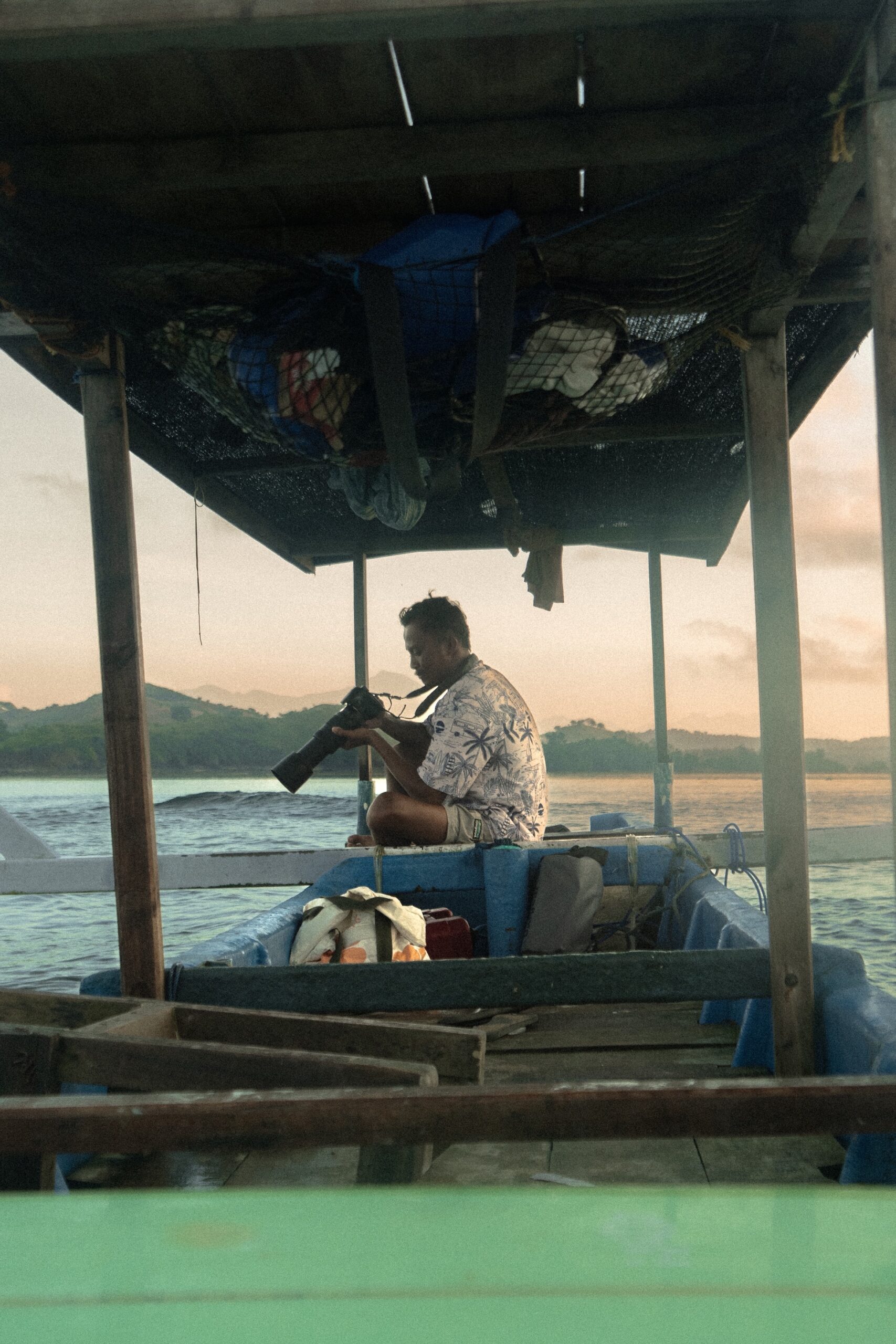
When you are sitting in the water, your view of the horizon is flat. It is incredibly difficult to read the exact contour of a wave or judge its speed. Traditional coaching from a boat or the beach helps, but a drone captures a perspective that changes everything: the relationship between your board and the wave's power source.
The Blind Spot: Many intermediate surfers pull out into the shoulder (the safe, flat zone) too early because it feels safe. Alternatively, they get caught behind the breaking section because they cannot visualize the wave's peeling angle.
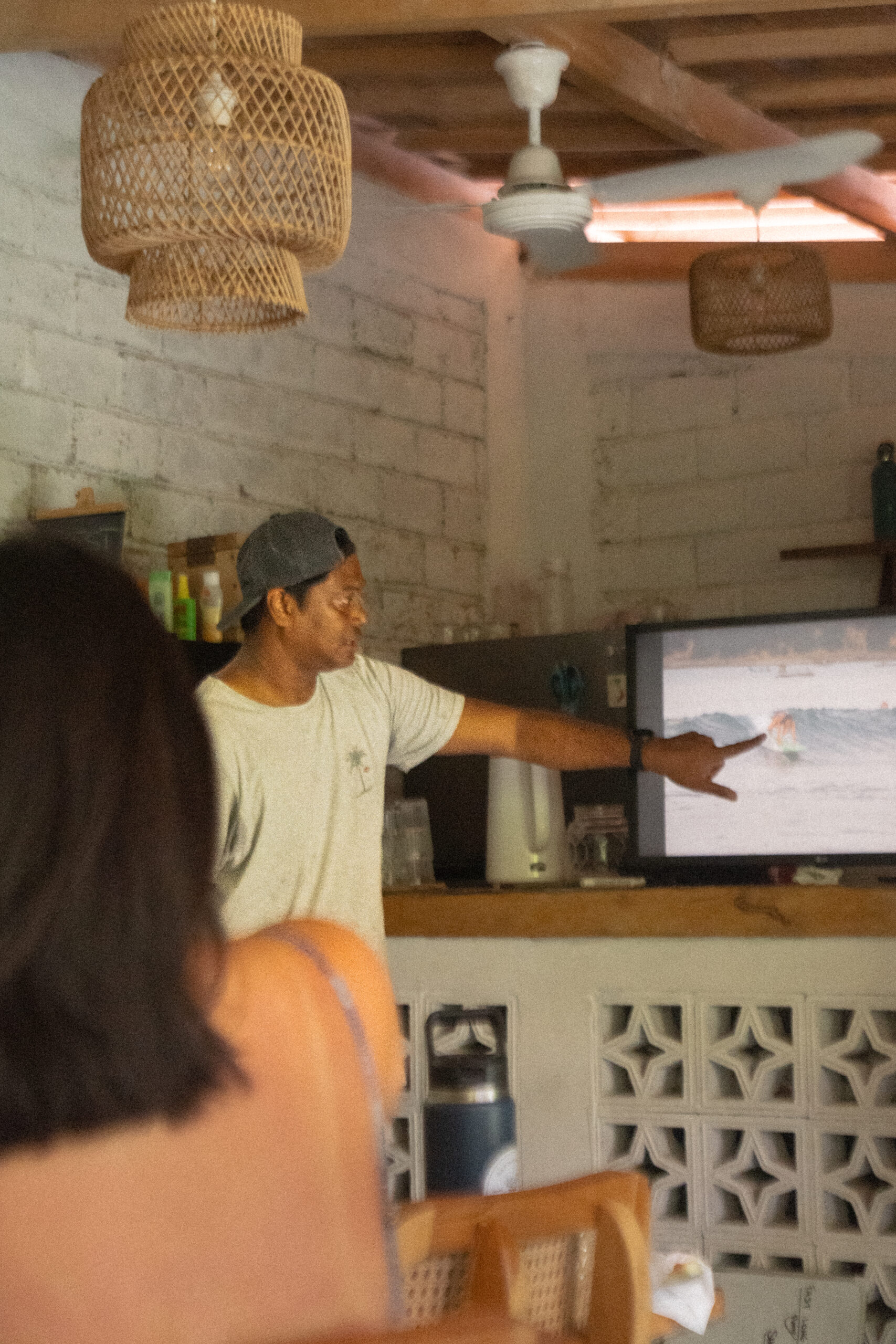
The Video Fix: Drone footage from breaks around Gerupuk reveals your exact positioning and line choice. During our review sessions, we can pause the footage to show you precisely where the pocket of the wave was, whether you paddled into the peak at the optimal angle, and exactly where you missed the opportunity to compress and pump for speed.
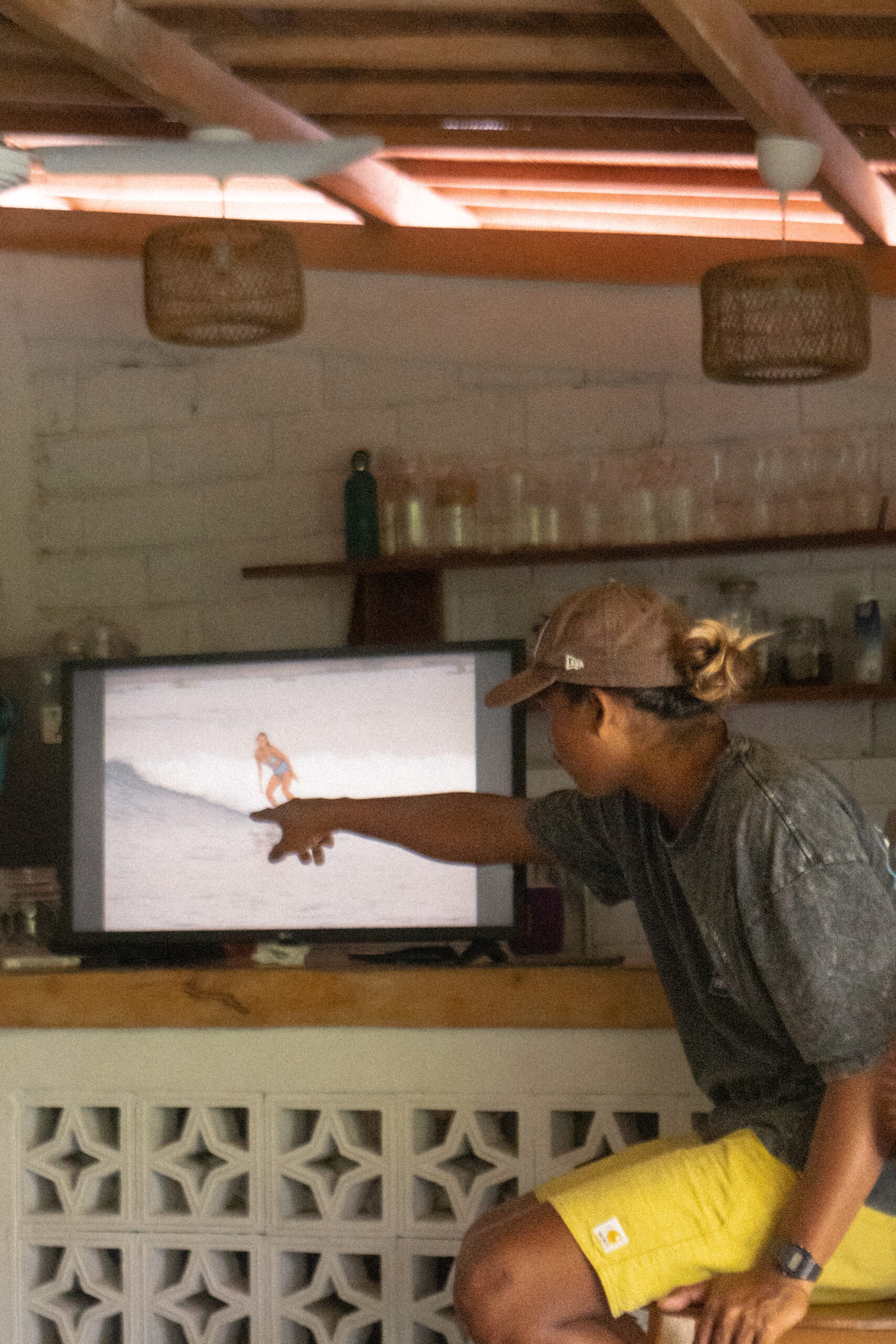
The Freeze-Frame: How High-Res Photos Decode Your Biomechanics
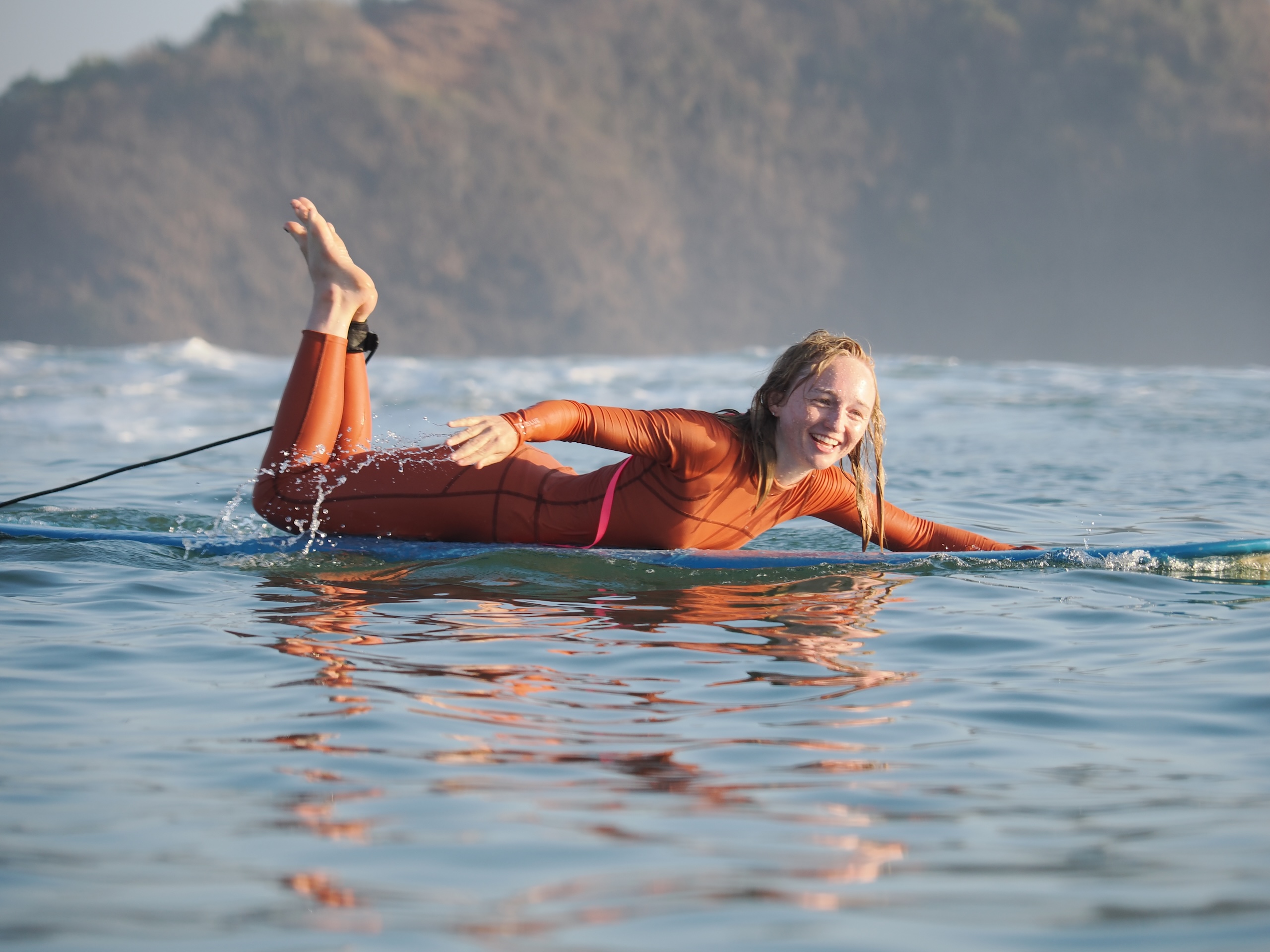
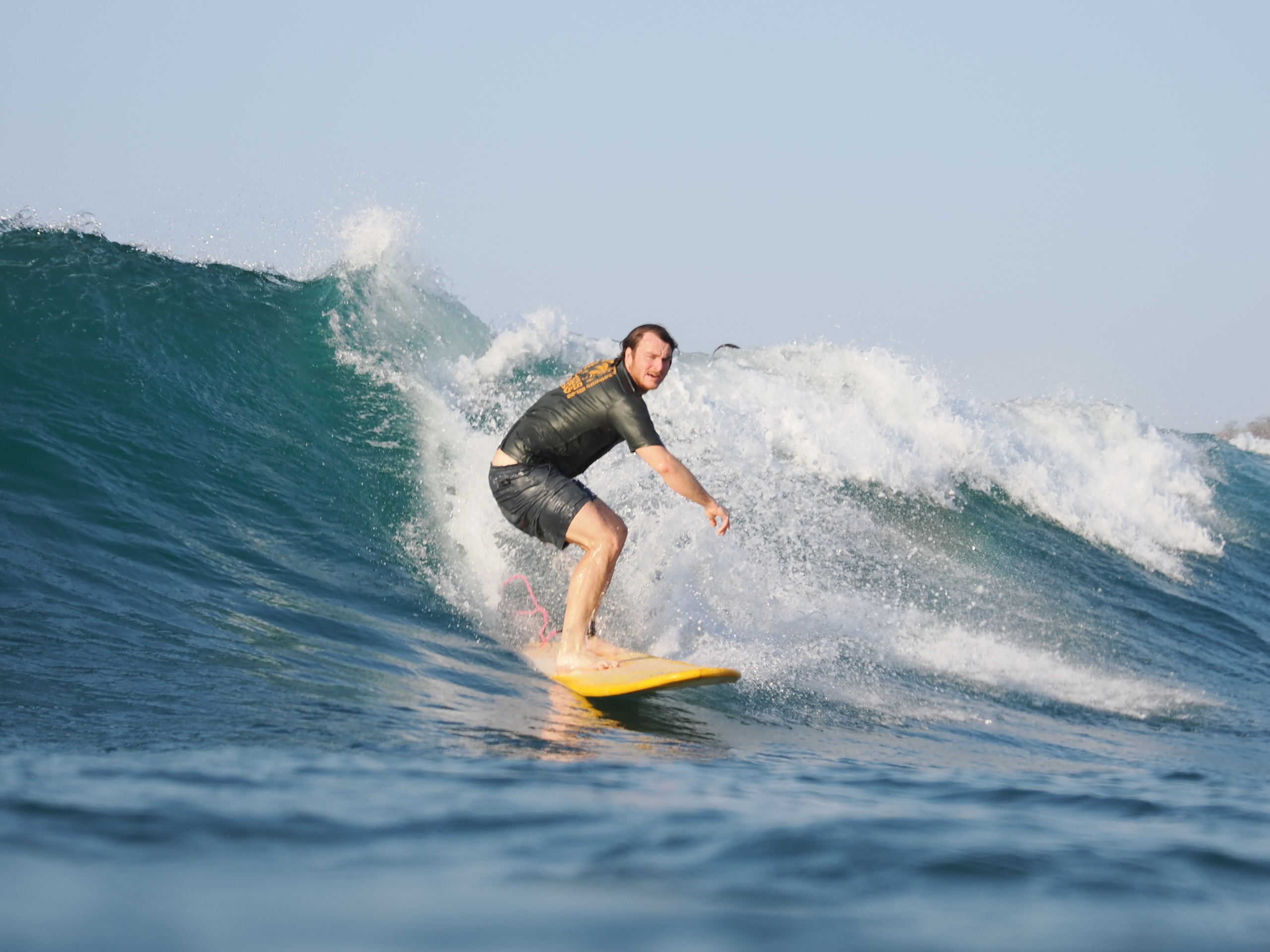
While drone footage is perfect for analyzing pacing, flow, and positioning, high-resolution land-based photography captures the micro-movements of your body. Your stance dictates everything your surfboard does. If your biomechanics are slightly off, your board will resist you.
The Blind Spot: You feel like you are deeply compressing your knees during a bottom turn, but you keep losing balance or tracking straight into the flats.
The Photo Fix: Freezing a high-resolution frame at the exact millisecond of your take-off or turn exposes the subtle technical errors holding you back. Common blind spots we uncover include:
- The Trailing Arm: Dropping your back arm or keeping it static, which locks up your shoulders and prevents your body from rotating through a turn.
- Stiff Ankles & Waist Bending: Bending forward at the waist rather than sinking your hips and driving through your knees, which shifts your center of gravity completely off-balance.
- Target Lock: Looking down at your feet or the nose of your board instead of projecting your eyes down the line toward where you actually want to go.
The "Roots Setup": Why Intimate Coaching Beats the Mass Surf Camp
Many large commercial surf camps advertise video analysis, but it often looks like a crowded room where an exhausted coach tries to give 50 surfers a generic, 60-second critique. You leave with plenty of cool photos for social media, but zero actionable feedback for your next session.
At Roots Lombok, we do things differently by keeping our retreat strictly capped at just 6 guests per week.
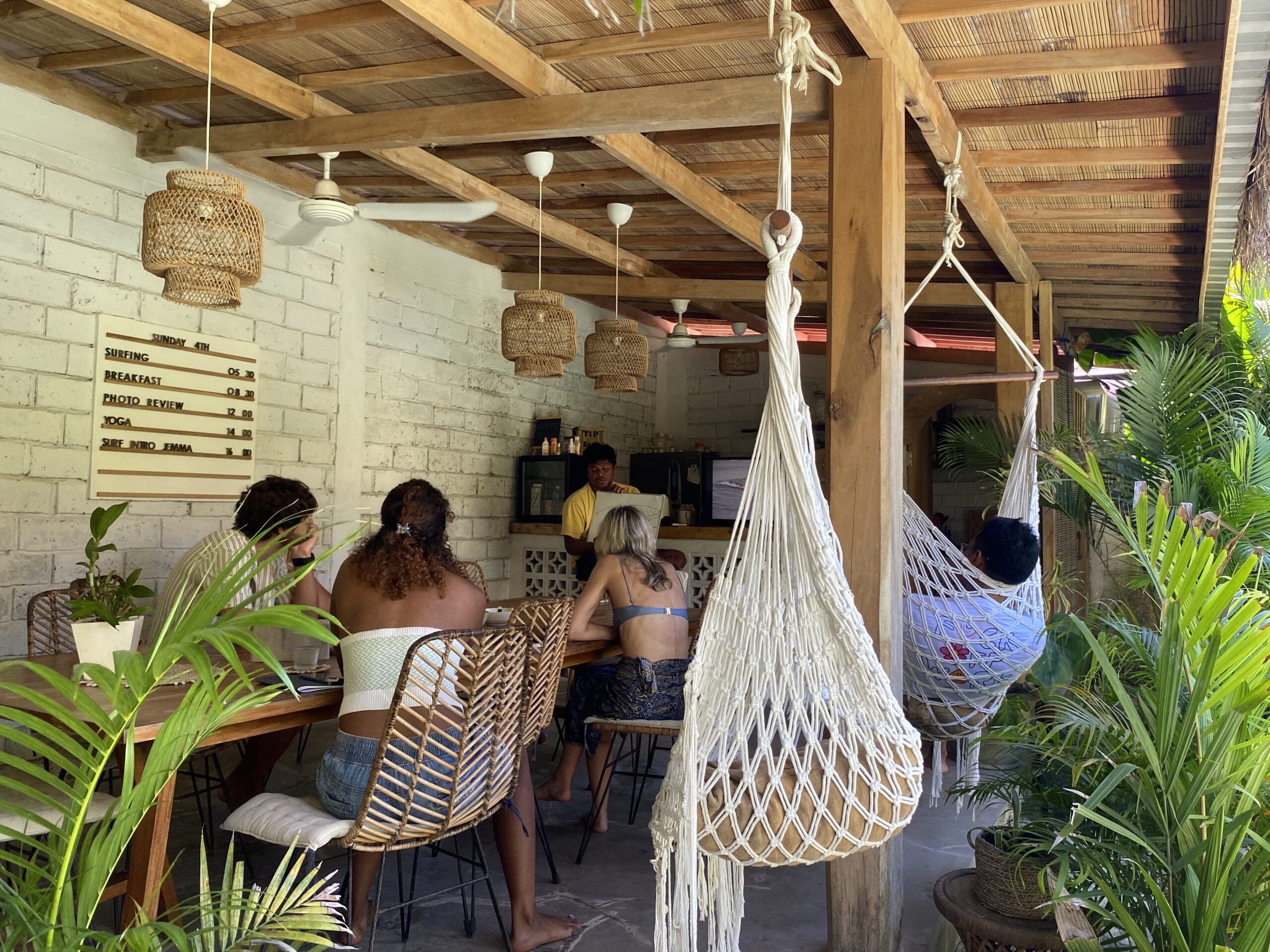
Our daily video and photo reviews are unhurried, collaborative, and entirely personalized. We sit down together in a comfortable, family-style setting to break down your waves frame-by-frame. Because our surf coaching ratio is kept incredibly tight, your coach remembers exactly what you were working on in the water and can link it directly to what is on the screen.
This creates a rapid, hyper-focused loop: you surf in the morning, analyze your blind spots in the afternoon, practice your muscle corrections during our surf-specific yoga or breathwork sessions, and execute the adjustment the very next morning.
Stop Guessing. Start Progressing.
If you want to transition seamlessly to a shortboard, refine your turns, and stop wasting waves, it’s time to take the guesswork out of your technique. Let our coaches show you exactly what your surfing looks like from the air and the land, so you can build permanent, correct muscle memory.
Ready to unlock your potential in the quiet, perfect waves of South Lombok?
👉 Explore our Semi-Private Surf and Surf & Yoga Packages and secure one of our 6 weekly spots today.